01
Pause passage until the section 9B methodology is published.
Don't vote on a new functional capacity test (s.9B) whose methodology is unpublished and whose Technical Advisory Group does not yet exist.
NDIS Amendment Bill 2026
Statement 1 of 4. 478 families spoke up.
The map
From 478 responses. 17 did not share a postcode.
Each dot is a federal electorate. Search a postcode or name, or drag to explore. Tap to see what your electorate said.
VIC - Federal electorate
29 households responded from this electorate.
What respondents flagged
The transfer
Each block is one hour of weekly support. Hours cut from the funded column reappear, unpaid, on the family.
20 of 20 funded support hours remain. 0 hours per week have transferred to unpaid family labour - 0 hours per year per carer, roughly 0 million hours nationally, worth $0.0 to $0.0 billion every year.
Shift 1,040 hours a year back onto each female primary carer and that is roughly 0M hours nationally, worth $0.0B-$0.0B a year. The saving did not remove the work. It moved it onto mothers.
A day in the life
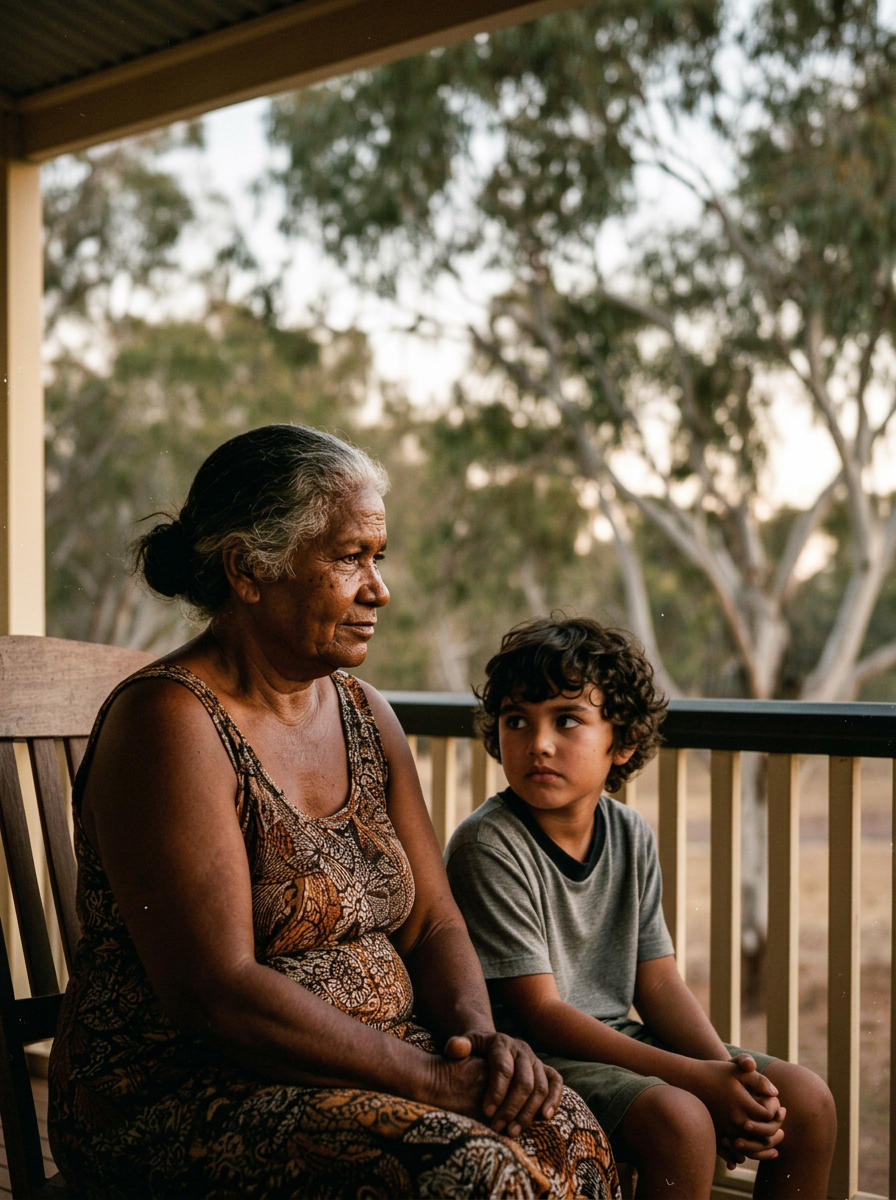
regional Queensland
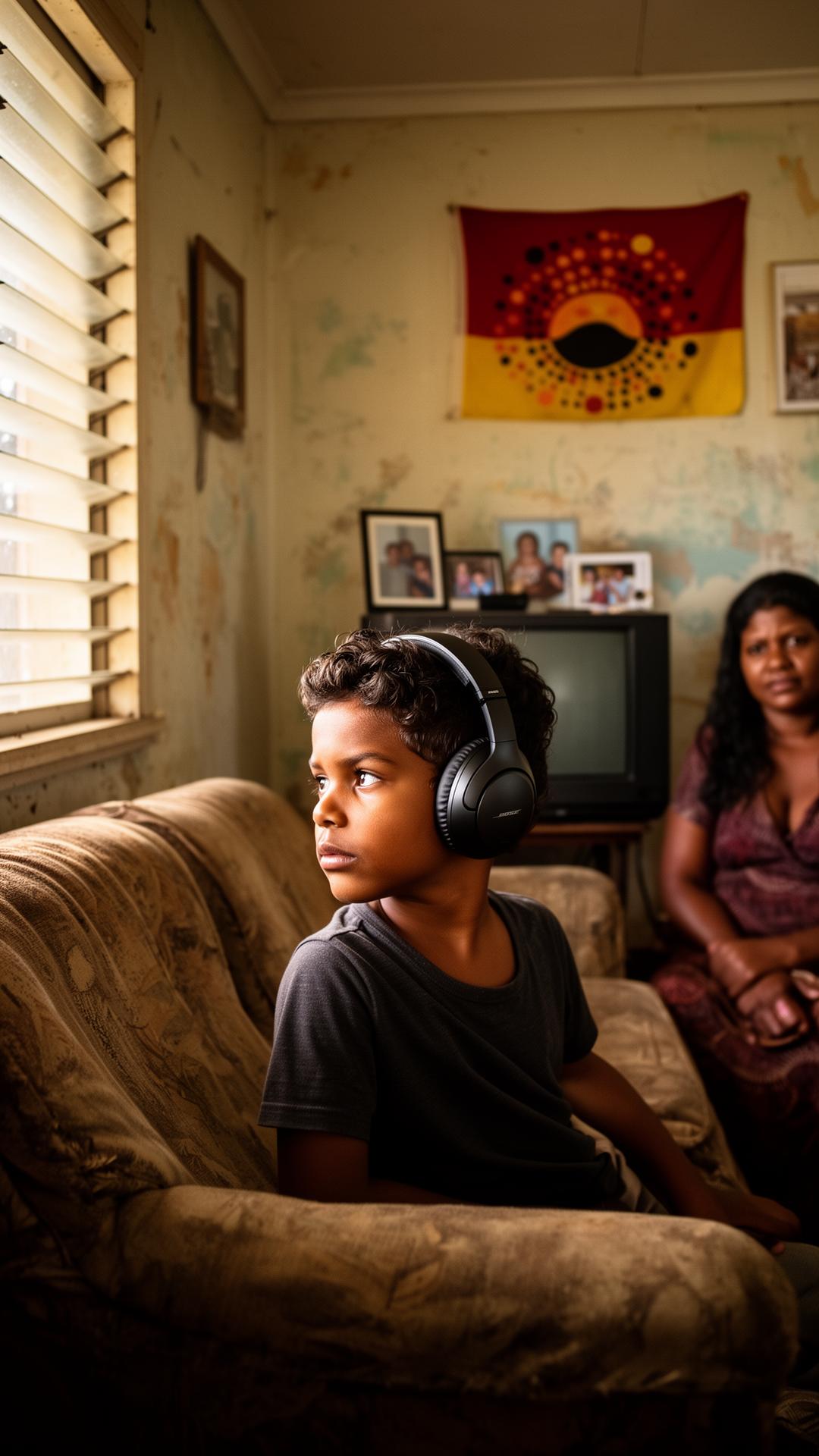
Aunty May & Jay
The assessment said fortnightly. The nearest therapist is three hours away.
Aunty May is 62 and the primary kinship carer for her grandson Jay, 8, who is autistic and has limited speech. Jay used to see his occupational therapist on Country - in language, on the family's land, in a way that was culturally safe and made sense to him. Now Aunty May drives three hours each way to a clinic in town that is bright and white and too loud for him.
Pack the esky, the AAC tablet, the headphones. Jay does best if the car is already running when he wakes.
Arrive early to walk a lap of the carpark before OT. The clinic fluoros are a known trigger.
Forty-five minutes in the white room. The OT is doing her best, but Jay covers his ears, rocks, and signs 'home' three times. No language. No Country. No Elders walking past.
Three hours back. Jay finally sleeps an hour out of Charleville. Aunty May drives with one hand and watches the fuel gauge with the other.
Home. Aunty May carries Jay up the porch steps asleep. Her knees are not what they were.
Jay into bed, AAC tablet on charge. She lets herself sit down for the first time since 5am.
She opens the day's mail at the kitchen table. NDIA letterhead.
“Walk in our shoes for a week. They do not understand.”
Relevant provision
Proposed section 9B (Functional capacity) defines capacity in a context that excludes, as far as possible, environmental and personal circumstances - including remoteness, provider scarcity, cultural context and travel burden. Schedule 1, Part 8 (proposed ss 24(5), 25(1B) and 25A) requires that a person undertake 'all appropriate treatment' before an impairment can be found permanent, and the Explanatory Memorandum (Item 92) states explicitly that 'a person's personal and environmental circumstances, including financial and geographical circumstances, are not relevant' - the EM's own worked example ('Soo') is a regional five-year-old found ineligible because longer waitlists in her area cannot be taken into account. Proposed section 25B (Alternative Support Requirements) allows exclusion from NDIS eligibility where another support system is said to be 'available', even where it is not practically accessible, culturally safe or timely. Proposed section 34A allows the Minister, by legislative instrument exempt from sunsetting, to reduce funding components even where the result is less than the cost of reasonable and necessary supports.
Survey finding
The concern is not that support is formally removed. It is that support remains technically available while becoming practically inaccessible. A child in a metropolitan area can access fortnightly therapy within a short drive. A child in a remote community may face six hours of travel, provider shortages, cultural barriers and significant additional costs to access exactly the same funded support. Two children may receive the same budget on paper while experiencing very different levels of real-world access.
What follows from one change
Proposed section 9B tells the assessor to look only at what a child can do on the day of a test, ignoring the family, school and community around them. Proposed section 48A cuts the window to challenge a reassessment from 90 days to 21. More children lose supports, faster, with less time to push back. Tap each step to see how it unfolds.
Top concerns
In their own words
254 responses from participants, parents, carers and siblings who consented to be quoted.
Browse by your state
“That NDIS cuts are increasing a rising danger of physical safety in our family. I am in danger of being killed or seriously Injured by my child due to decreased NDIS funding”
“Investing in a strong NDIS also has flow-on a benefit to all Australians – for every dollar spent on the NDIS, the scheme delivers $2.25 back into Australian communities.”
“Early intervention via NDIS had helped my tween stay in contact with her peers socially and physically despite her disabilities and without continued support she will lose all of this progress and I fear will not remain in mainstream education”
“You are seriously impacting social cohesion and creating serious future economic implications.”
“Real people with real lives will be drastically affected by these changes. If you need more money in your budget, tax billionaires and corporations more appropriately.”
“Ndis participants and their families are people, not scape goats, not burdens, not villians. People that deserve to be treated with dignity by a system that is supposed to provide support. Not make it harder to live.”
“Disability is not a choice. Ensuring equal access and supported access to community and society should be available to all including disabled people.”
“Build the lifeboats before sending people overboard. Services have been severely underfunded for a decade due to private companies due to snapping up NDIS money.. any gaps in adequate intervention or family support will have long-lasting impacts.”
“I am a late diagnosed mum at 26. I didn’t ask to be born autistic and yet I am and I fight for support for myself because my parents didn’t and I now fight for my kids. Autistic people aren’t going anywhere so stop making them suffer.”
“Child in autistic burnout & can't go to school/leave house. I'm a low-income single parent; had to reduce work. Too scared to apply for a support worker in case her plan was cut. We should be able to ask for help w/o fear of losing what little we have.”
“It is unfair and unAustralian to expect the burden and cost of care to shift to parents and carers.”
“I have a non disabled child as well as a disabled one. The workload associated with the disabled child is exponentially more than what the non-disabled child required at the same age.”
“The NDIS has been life changing for us. We've gone from every hour of every day being a complete war zone to 3-5 episodes a day. This is a huge improvement. We've been able to access specialist support that we simply could not afford without the NDIS”
“extensive knowledge of the system due to my previous employment in public health allied health assisting with NDIS goal setting & planning for supports & funding as part of multidisciplinary team of medical, nursing, speech pathology, ot, physiothera”
“Each person is an individual. You need to look at each case individually and not treat everyone as needing the same level of funding.”
“Autism is a lifelong disability. Autistics will die without support.”
“Who will be held accountable when people die as a result of this bill?”
“We haven’t been meaningfully consulted, and none of us want this.”
“I'd love to tell my story to media but don't know how especially when I want me de identified to protect my child's privacy”
“We are already at our limit. Without support it would feel impossible.”
“Families with children with disabilities are stretched financially. Have more medical needs and less ability to work. Supporting families and people with disabilities adds money to the economy rather than trapping people in a poverty society.”
“save money by not defending ndis c**p decisions that get overturned at tribunal - save money by paying parent well for caring ($32k for Centrelink) - rather than SIL $400k+!”
“Every day is already a nightmare. I’ll need to relinquish my children if politicians strip the NDIS back any further. And if I have to do that, there’s not much point in carrying on, is there? These children deserve human rights. Their mother does too.”
“It is *essential* that whatever changes are made to the ndis the changes include measuring and *publicly* reporting 6 monthly or more often on how many disabled people have died, for both participants and people forced into other programs.”
What we're asking Parliament
Want the evidence base?
The full case for continued NDIS supports, plus live Harm Tracker data.
Read the evidenceDon't vote on a new functional capacity test (s.9B) whose methodology is unpublished and whose Technical Advisory Group does not yet exist.
Remove proposed s.50A(4). Every participant must keep the right to internal and AAT review of decisions about their own plan.
Automated systems must not take final administrative actions affecting access to support without meaningful, accessible human review.
Care historically funded by the scheme must not be silently reassigned to families - overwhelmingly to mothers.
The Minister must not be able to reduce individual participants' funding by legislative instrument without independent oversight and merits review.
CRPD, CRC, gender and First Nations impact assessments on every operative provision - before the Bill is debated, not after.
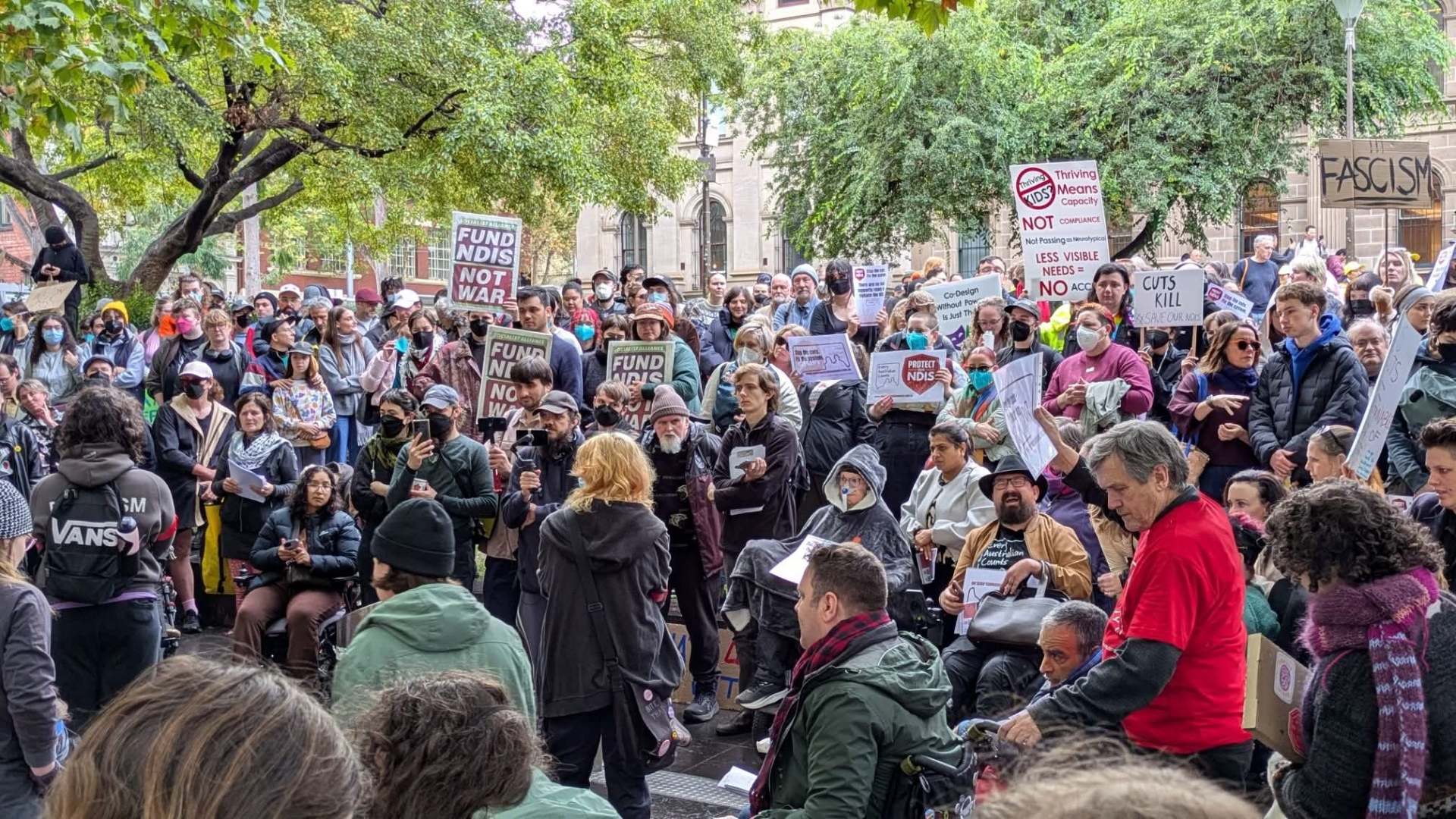
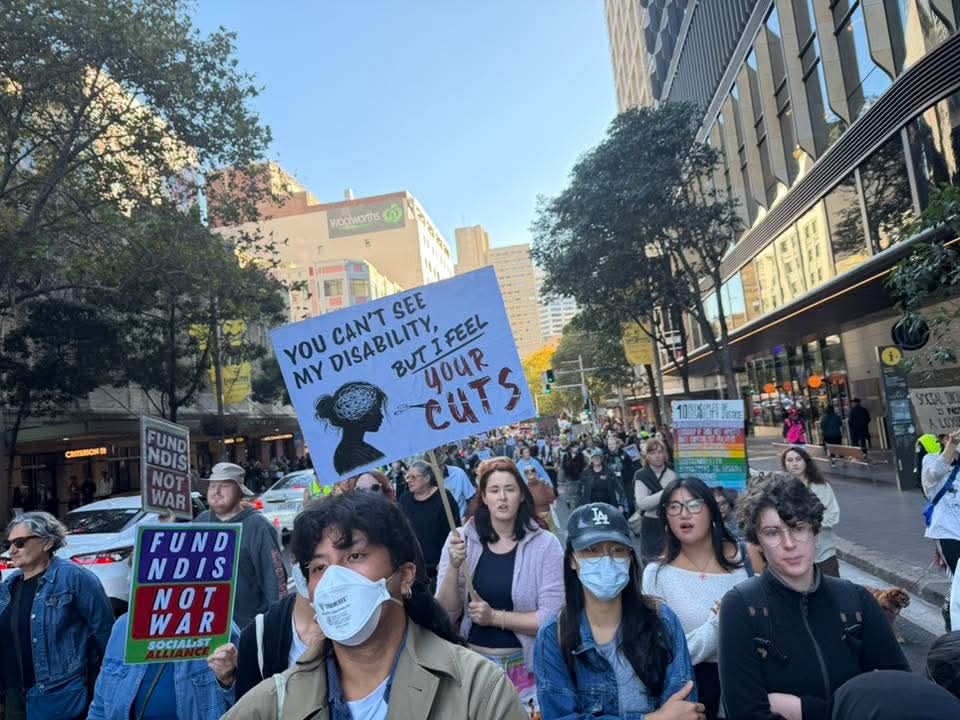
From the streets

A closing statement
478 families spoke up. Parliament has the chance to listen.